A PSP Provider Consolidation Example That Scales
See a PSP provider consolidation example for iGaming and global commerce: one control plane for routing, risk, reconciliation, and growth at global scale.
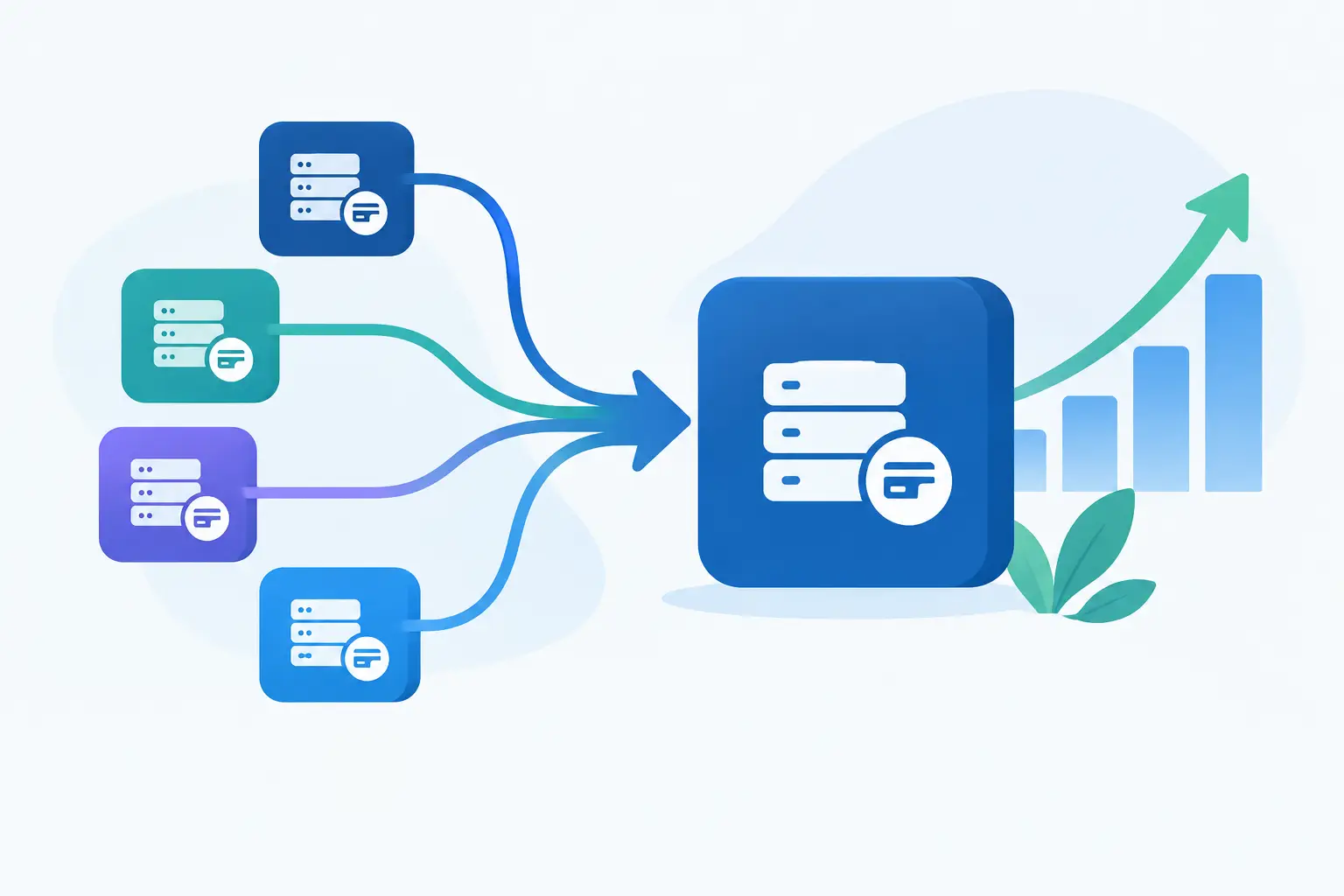
A PSP provider consolidation example is not a story about cutting every provider from the stack. It is about taking control of a fragmented payment operation before fragmentation starts reducing approval rates, delaying settlements, and creating risk blind spots. For a high-volume iGaming operator, crypto exchange, or international merchant aggregator, the objective is simple: keep the payment options and acquiring coverage that drive conversion, but operate them through one commercial and technical control plane.
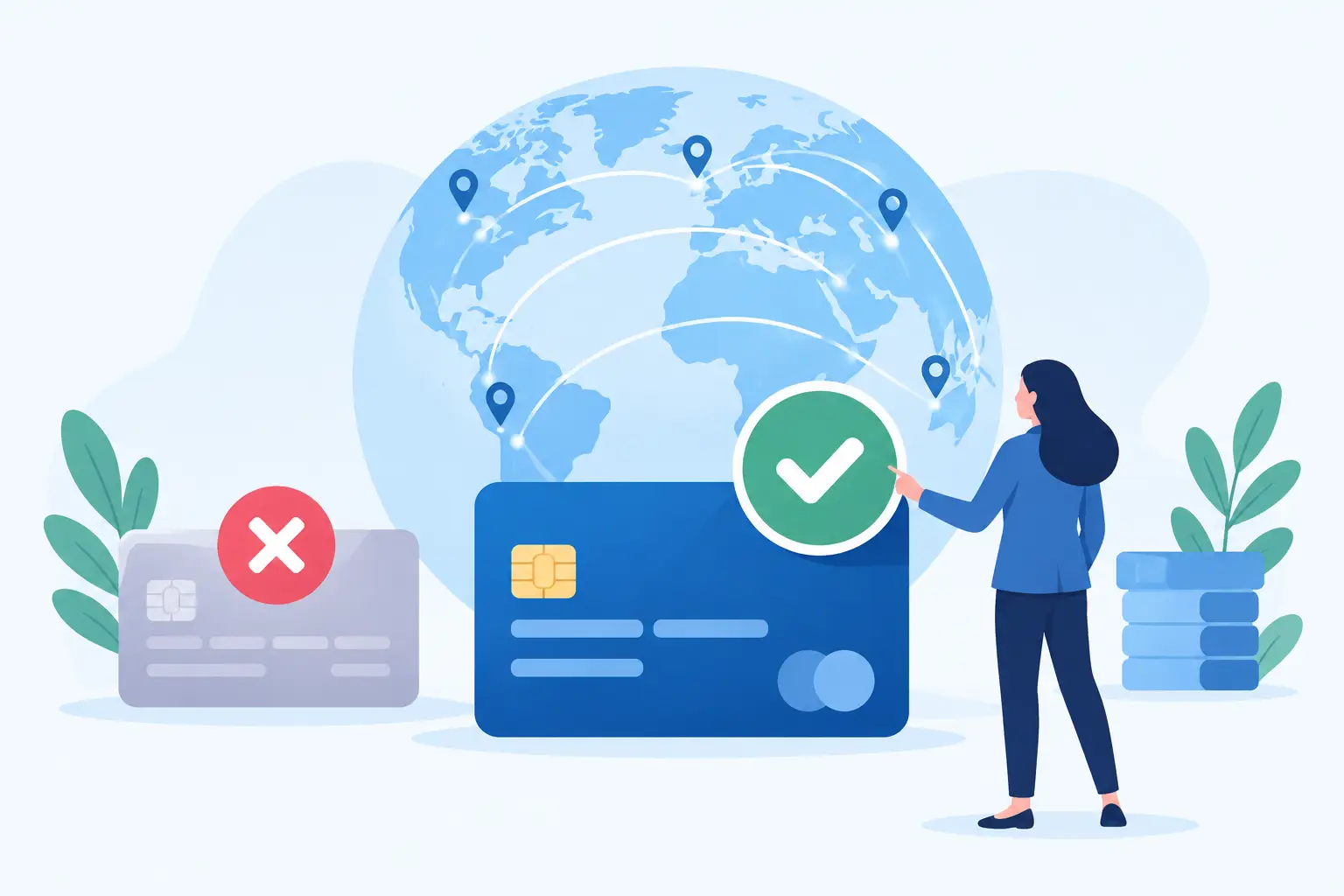
Consider an operator accepting cards, bank transfers, local wallets, and crypto across Europe, Latin America, and Asia-Pacific. It may work with six payment service providers, three acquirers, separate fraud tools, and multiple reconciliation processes. Each relationship solved a local problem at the time. Together, they now create an operational burden that slows every market launch and makes transaction performance harder to manage.
PSP Provider Consolidation Example: A Regional Operator Going Global
A fast-growing sportsbook begins in several European markets with one primary card acquirer, two local payment providers, and a wallet integration. As it expands to Brazil, Canada, and selected Asian markets, it adds more PSPs to cover Pix, local bank transfer rails, regional wallets, and alternative payment methods.
The business now has payment coverage, but not payment control. Its payments team monitors separate provider portals. Finance teams reconcile multiple settlement files on different schedules. Risk analysts review fraud signals that are not connected across payment methods. Product teams must build a new integration whenever a provider changes an API or a new market needs a local rail.
The operator does not replace every provider. Instead, it introduces a payment orchestration and merchant operations layer between its platform and the provider network. The operator integrates once with the orchestration API, then connects existing and new PSPs behind that layer. Routing rules determine which provider receives a transaction based on market, payment method, merchant entity, currency, issuer behavior, fraud score, transaction amount, and historic approval performance.
A card payment from a Brazilian customer can be sent to the acquirer with the strongest local issuer performance. A failed transaction can be retried intelligently through an approved secondary route where local rules permit it. A player in another market can be offered the preferred local wallet without the checkout application needing to manage separate provider logic.
This is consolidation by control plane, not consolidation by dependency. The operator retains provider optionality while reducing the number of systems its internal teams must operate.
Before consolidation: provider sprawl becomes a revenue issue
Before the new operating model, transaction data is spread across portals, CSV exports, webhooks, and internal reporting tools. The team may know total declines, but it cannot quickly separate soft issuer declines from technical failures, duplicate attempts, fraud rejects, or provider-specific degradation.
That limits optimization. If approval rates fall in one market, the team can spend days identifying whether the issue is an issuer mix change, a routing problem, an acquirer outage, a 3DS configuration issue, or an overly aggressive fraud rule. During that time, deposit conversion falls and support contacts rise.
Settlement operations are similarly fragmented. Each PSP has different cutoffs, reserve logic, payout timing, currencies, and report formats. Finance teams are forced to reconcile at the provider level before they can see an accurate picture at the merchant, market, or payment-method level.
After consolidation: one operating view, many execution paths
With a consolidated platform, provider connections remain specialized at the edge, while transaction decisions and operational data are centralized. The operator has one normalized view of authorization status, provider response codes, fraud decisions, chargebacks, refunds, fees, settlements, and balances.
The value is practical. Payments leaders can compare approval performance by acquirer, card brand, country, issuer, device type, and payment method. Risk teams can apply consistent policy logic across providers while preserving market-specific controls. Finance can reconcile transactions to settlements from one ledger model rather than rebuilding that model in spreadsheets.
The provider network becomes easier to change. If a local PSP loses performance, pricing becomes uncompetitive, or a new regulation requires a different partner, the operator can update routing and integrations without rebuilding the checkout experience or disrupting every downstream workflow.
What Consolidation Changes in Daily Operations
The strongest business case is not fewer vendor invoices. It is faster action when performance changes.
For payments teams, centralized routing makes approval-rate optimization a continuous process. Rules can prioritize a specific provider for a market, then adjust according to live success rates, cost thresholds, provider availability, or fraud exposure. This should not be treated as a set-and-forget configuration. A route that performs well for one issuer group or payment method may be expensive or unreliable for another.
For risk teams, consolidation creates a broader decision surface. A player who exhibits suspicious behavior through a card flow may also attempt a wallet or bank-transfer deposit. Shared transaction intelligence makes it easier to identify patterns across rails. In iGaming, that matters because first-party misuse, bonus abuse, account takeover, and chargeback exposure rarely stay inside one payment method.
For operations teams, a unified merchant environment reduces the time spent switching between provider portals to investigate disputes, refunds, or missing deposits. Case handling improves when support agents can see the payment attempt, related customer activity, routing path, and provider response in one place.
For finance teams, centralized reconciliation creates a clearer link between gross processing volume, provider fees, reserves, chargebacks, net settlements, and merchant balances. That does not remove the need to validate provider settlement files. It does make exceptions visible faster and produces a consistent internal record for reporting.
The Trade-Offs: What Not to Consolidate Away
Consolidation can fail when it becomes an excuse for over-centralization. A single acquirer is not a resilient strategy, especially for high-risk verticals and multi-market businesses. The point is to centralize visibility, controls, and integrations while keeping credible alternatives for critical payment routes.
There is also a risk of forcing every provider into the same lowest-common-denominator model. Local payment methods have distinct confirmation flows, refund behaviors, regulatory requirements, and customer expectations. A useful orchestration layer standardizes what can be standardized, such as transaction states, reporting, token handling, and routing controls, while preserving method-specific capabilities where they create conversion value.
Migration timing matters. Moving every market, payment method, and merchant account in a single release creates unnecessary exposure. A better approach starts with a payment flow where data quality is poor, operational workload is high, or the existing integration blocks growth. The business can validate routing, reconciliation, and support workflows before expanding the model.
Architecture Requirements for a Consolidated PSP Model
The architecture needs more than a gateway API. It needs a transaction orchestration layer that can normalize provider responses, route transactions based on configurable logic, and maintain idempotent processing when networks or providers fail. Tokenization should support controlled portability, subject to card scheme rules, provider agreements, and the business's PCI scope.
A durable ledger is equally important. Authorization, capture, refund, chargeback, fee, reserve, and settlement events must be recorded as distinct financial events rather than treated as a single payment status. Without that detail, reconciliation becomes another manual system outside the platform.
Real-time operational visibility also changes how teams work. Event-driven updates can notify operations when a provider's error rate rises, while dashboards show transaction success by route and payment method. A high-performance stack built with technologies such as .NET 8, PostgreSQL, Redis, SignalR, Docker, Azure, and Cloudflare can support this type of control plane, but the design principle matters more than any individual component: performance data must be available quickly enough to make routing decisions useful.
Security and access control must be built into the operating model. Role-based permissions should separate merchant management, refunds, risk-rule changes, settlement access, and configuration approvals. For payment businesses serving multiple merchants, each merchant needs clear visibility into its own data without gaining access to another merchant's transactions or balances.
How to Measure Whether It Is Working
Approval rate is the most visible metric, but it is not enough on its own. A higher approval rate achieved by accepting more fraud or paying materially higher processing costs is not an operational win.
Track approval rates by market, method, issuer segment, and route. Monitor provider latency, technical failure rates, soft-decline recovery, fraud loss, chargeback ratio, refund completion time, settlement accuracy, and the time required to onboard a merchant or launch a new payment method. For an iGaming operation, deposit-to-bet conversion and the speed of resolving player payment complaints also belong in the measurement model.
The commercial measure is control. If the payments team can identify a weak route in hours rather than days, move transaction volume without a checkout rebuild, and reconcile settlements without a manual reporting project, consolidation is producing real operating leverage.
A white-label infrastructure platform such as ZepoPay can make that model deployable under the payment business's own brand, with provider connectivity, merchant operations, risk tooling, and routing managed from one environment. The right first move is usually not a wholesale migration. Start with the payment corridor where lost approvals, fragmented reporting, or risk exposure is already costing the business money, then build the control plane outward from there.