How to Reduce Payment Declines at Global Scale
Learn how to reduce payment declines with smarter routing, local methods, accurate data, and risk controls that protect approval rates globally at scale.
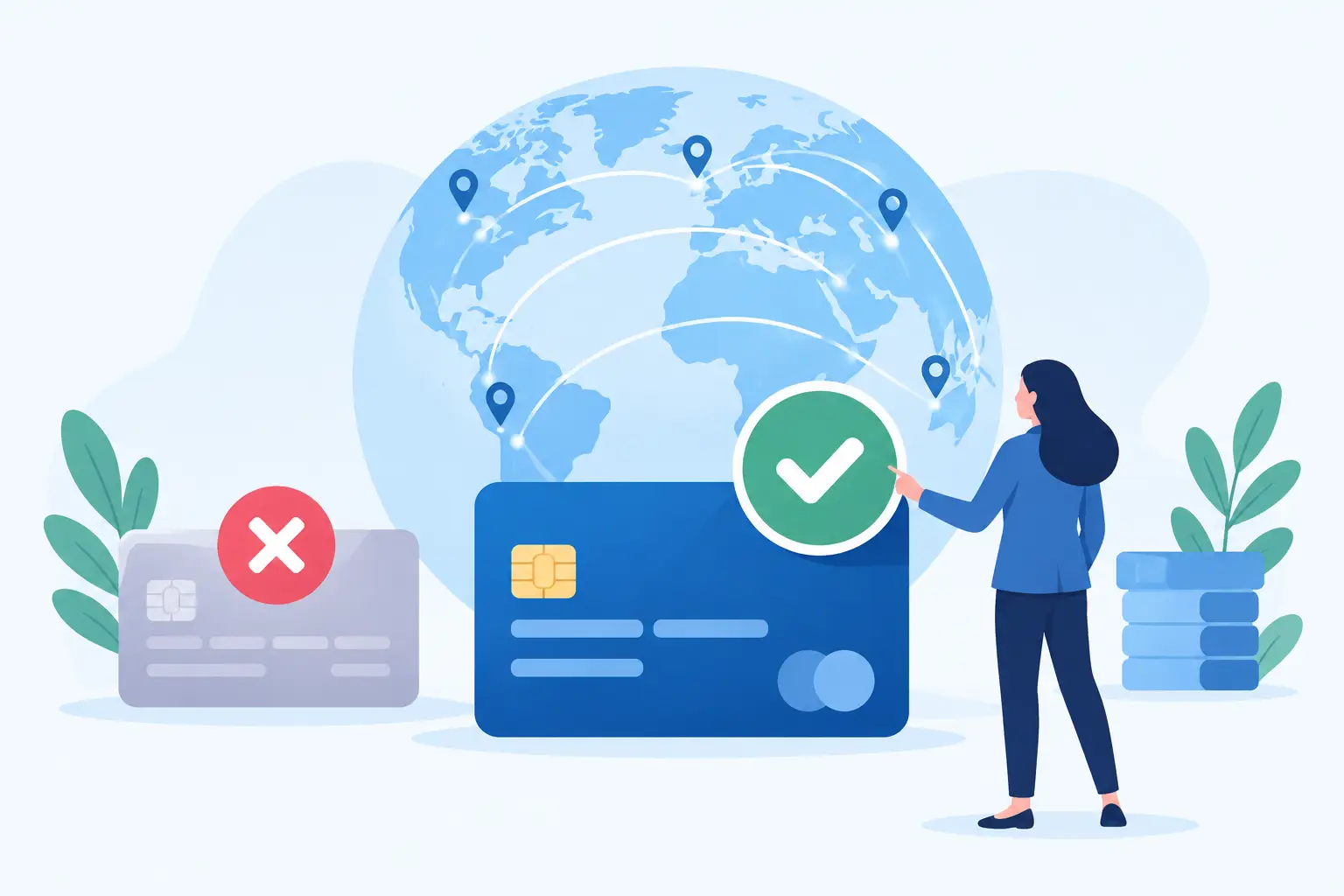
A customer reaches the deposit or checkout screen, submits a valid payment, and receives a decline. For an iGaming operator, crypto exchange, or global marketplace, that is not a minor technical event. It is lost revenue, higher support volume, lower customer lifetime value, and a reason for the customer to try a competitor. Knowing how to reduce payment declines starts with treating authorization performance as an operational system, not a single gateway metric.
The target is not to approve every transaction. A payment stack that forces approvals through without discipline will attract fraud, chargebacks, and acquirer scrutiny. The goal is to raise legitimate approval rates while maintaining risk controls, clear reconciliation, and sustainable acceptance across each market.
Why payment declines happen
A decline code rarely tells the complete story. The issuing bank may reject a payment because of insufficient funds, expired credentials, merchant category restrictions, velocity limits, suspected fraud, cross-border controls, or a mismatch between the transaction data and the cardholder profile. The acquirer, processor, fraud engine, or merchant configuration can also be the source of the failure.
This distinction matters. A generic response to every decline, such as retrying the same authorization through the same route, can reduce conversion and increase network fees. It may also trigger issuer velocity controls. High-performing payment operations classify declines by origin, issuer response, payment method, geography, merchant, BIN, device, and customer behavior before making a routing or risk decision.
Soft declines deserve particular attention. These are transactions that may succeed after customer authentication, a credential update, a delayed retry, or a different acquiring route. Hard declines, such as a closed account or invalid card number, should normally stop immediately. Mixing the two produces unnecessary retries, false fraud signals, and poor customer experience.
How to reduce payment declines with better routing
Single-provider processing creates a single point of failure. Even a capable PSP or acquirer will have uneven issuer relationships, regional coverage, approval performance, and risk appetite. A transaction that declines through one route may be fully legitimate and approved through another acquirer with stronger issuer connectivity in that market.
Payment orchestration makes routing a real-time commercial control. Set routing rules using factors that materially affect approval odds: card BIN and issuer country, transaction currency, amount, merchant category, customer history, time of day, payment method, and provider performance. For example, a domestic card payment may perform best through a local acquirer, while a cross-border card or high-value crypto purchase may require a provider configured for that risk profile.
Intelligent routing should not become uncontrolled cascading. Define a limited sequence of eligible providers, exclude routes with poor recent performance, and stop retries where the issuer response makes approval unlikely. A useful rule is to route for probability, not merely availability. The fastest available processor is not always the processor most likely to secure a legitimate authorization.
Monitor routing results at a granular level. A blended approval rate can look healthy while hiding a weak issuer corridor, an underperforming acquirer, or a provider outage affecting a valuable segment. Compare authorization rates by provider, country, issuer, BIN range, method, currency, and decline reason. Then move traffic based on evidence, not assumptions.
Improve the data sent with every authorization
Issuers make decisions with the data available at authorization. Missing, inconsistent, or poorly formatted fields create uncertainty, and uncertainty increases declines. Payment teams should validate cardholder data before submission, preserve the correct billing fields, send accurate merchant descriptors, and ensure that currencies, country codes, and transaction types are configured consistently across providers.
For card payments, network tokens and updated credentials can materially improve recurring and returning-customer performance. Tokens reduce exposure to expired or reissued cards and provide issuers with stronger transaction context. Account updater services can help as well, but their value depends on your customer base, card mix, and recurring-payment model.
Authentication data is equally important. When 3D Secure is required, pass complete device and customer information so the issuer can assess risk accurately. A thin authentication request can push more transactions into challenges or declines. For low-risk traffic, a well-tuned risk-based authentication strategy may preserve a frictionless flow while supporting liability-shift requirements where applicable.
The trade-off is clear: requesting more data can improve issuer confidence, but adding unnecessary customer fields can hurt checkout completion. Collect what improves authorization decisions and compliance. Do not turn payment forms into an interrogation.
Give customers a payment method that fits the market
Card acceptance alone is not a global payment strategy. In many markets, customers prefer bank transfers, real-time account-to-account rails, mobile wallets, cash-based options, or local alternative payment methods. Forcing a customer to use an unfamiliar card flow increases abandonment before an authorization is even attempted.
Local methods also reduce the structural causes of declines. A domestic bank transfer can avoid cross-border card restrictions. A wallet can remove manual card-entry errors. A local payment rail may offer stronger consumer recognition and better issuer-equivalent approval behavior than an international card transaction.
Method presentation should be dynamic. Show the options that are relevant to the customer’s country, currency, device, and transaction type, rather than displaying an overloaded global catalog. Keep a fallback path available if a preferred method fails, but make that fallback useful. Offering a domestic transfer option after a card decline is more credible than repeatedly asking for the same card.
For high-risk verticals, method diversification also protects continuity. Acquirer appetite can change quickly in iGaming, forex, and crypto. A balanced payment mix reduces dependence on any one rail while giving customers practical ways to fund accounts and complete purchases.
Tune fraud controls without blocking good customers
Fraud prevention and payment conversion are often managed as if they are opposing goals. They are not. Poorly tuned fraud rules damage both: legitimate customers are declined, while sophisticated fraud shifts to gaps created by blunt controls.
Start by separating first-party misuse, friendly fraud, account takeover, stolen-card fraud, and bonus abuse. These behaviors leave different signals and require different responses. A velocity threshold that identifies card testing may be irrelevant for a long-standing VIP customer. A device mismatch may require step-up authentication, not an automatic rejection.
Use a layered decision model. Basic rules can block clearly prohibited activity. Behavioral signals, device intelligence, transaction history, shared fraud intelligence, and model-based scoring can identify uncertain cases. The middle band should trigger proportionate friction, such as 3D Secure, document review, payment limits, or a delayed withdrawal review, rather than a permanent payment block.
Review false positives as seriously as confirmed fraud. Measure fraud-rule declines separately from issuer declines and track the approval rate of transactions that pass each risk rule. If a rule blocks significant legitimate volume, refine it by market, payment method, customer tenure, or amount. High-risk businesses need strong defenses, but those defenses must be measurable and adjustable.
Build a disciplined retry and recovery program
A decline does not always end the payment attempt. The recovery strategy depends on the decline reason and the payment type. A soft decline related to authentication may succeed once the customer completes 3D Secure. A temporary issuer issue may justify a carefully timed retry. Insufficient funds may warrant a retry after a known payday window for subscription payments.
Do not retry hard declines, suspected fraud, invalid credentials, or issuer responses that clearly prohibit further authorization. Repeated attempts can increase costs, frustrate customers, and damage your merchant reputation with issuers and acquirers.
Customer messaging is part of recovery. Replace vague errors with useful, compliant guidance: try another method, confirm bank details, complete authentication, or contact the card issuer when appropriate. Keep the customer inside the payment flow and retain the transaction context so they do not need to start over.
Operate approval performance as a live metric
Reducing declines is not a one-time integration project. Provider performance changes, issuer policies shift, fraud patterns evolve, and new markets introduce different payment expectations. Your operations team needs live visibility into acceptance, latency, provider health, routing outcomes, fraud decisions, and settlement exceptions.
Set practical alert thresholds for sudden changes in decline rate, issuer-specific failures, processor latency, 3D Secure challenge rates, and payment-method outages. The right response may be automatic rerouting, temporary method suppression, a revised fraud threshold, or escalation to a provider. Without transaction-level observability, teams discover these problems only after revenue has already been lost.
A white-label orchestration environment such as ZepoPay gives payment businesses control over this operating layer across 75+ providers and 250+ payment methods, while keeping merchant workflows, routing logic, and risk operations under their own brand.
The strongest payment operation does not chase a headline approval rate at any cost. It creates a payment system that recognizes good customers, routes them intelligently, gives them local choices, and learns from every failed authorization. That is how decline reduction becomes a durable growth advantage rather than a temporary uplift.