Multi Currency Payment Gateway API for Growth
A multi currency payment gateway API centralizes local payments, routing, settlement data, and risk controls for faster, safer global expansion at scale.
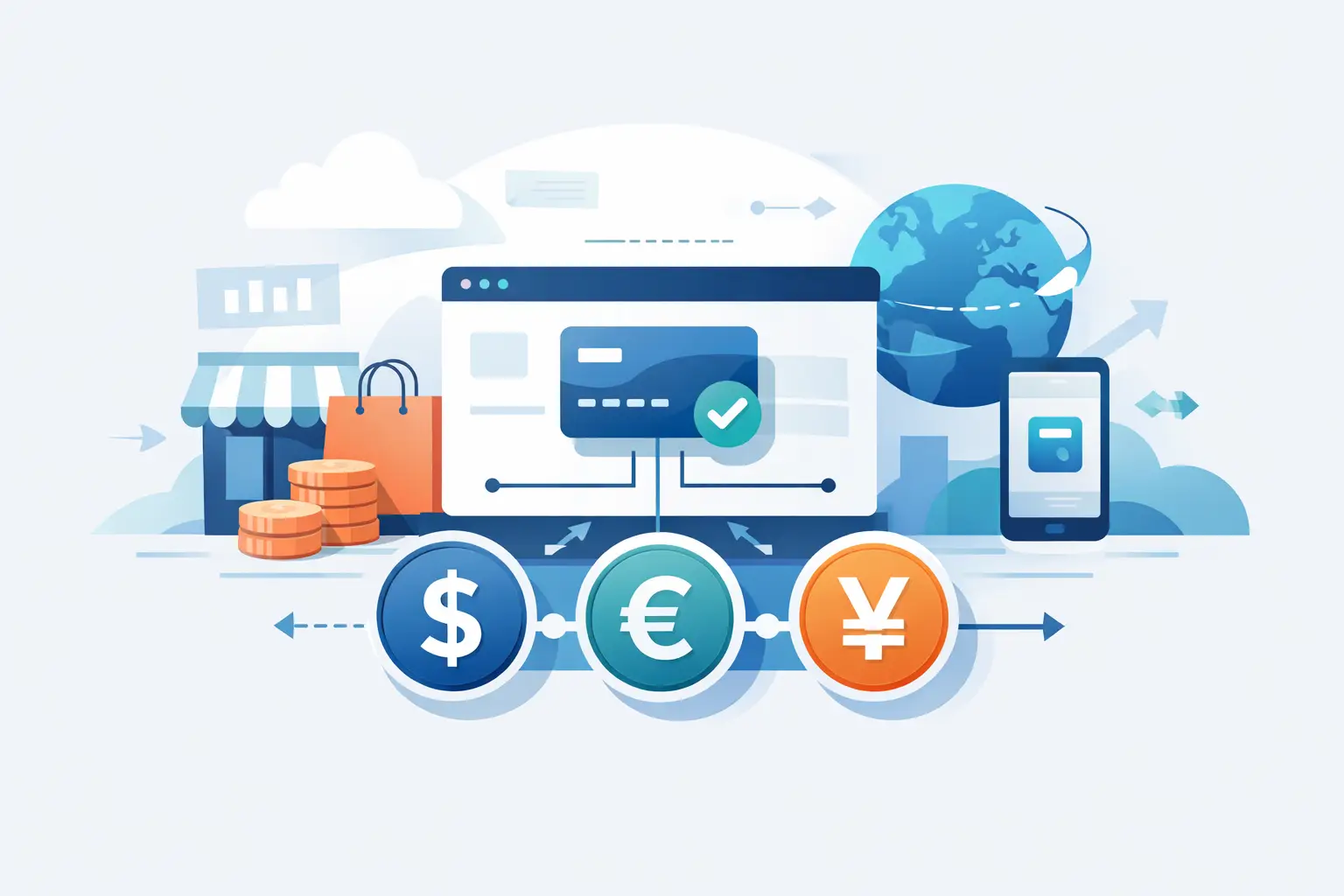
A multi currency payment gateway API becomes a revenue system the moment a business accepts payments across borders. It determines whether a customer can pay with a familiar local method, whether a transaction reaches the best-performing provider, and whether finance teams can reconcile funds without assembling data from disconnected portals.
For payment firms, iGaming operators, exchanges, forex brokers, and merchant aggregators, adding currencies is not simply a display-layer decision. The real operating challenge is coordinating payment methods, acquiring partners, FX logic, transaction routing, fraud controls, chargebacks, settlements, and merchant-level reporting from one controlled environment.
What a Multi Currency Payment Gateway API Must Do
At the basic level, a gateway API should accept a transaction amount and currency, collect payment details, authorize the transaction, and return a clear status. That is necessary, but it is not sufficient for international payment operations.
A production-grade multi currency payment gateway API needs to separate three related but different concepts: the currency a customer sees, the currency in which a payment provider processes the transaction, and the currency in which the merchant receives settlement. These values may match. Often, they do not.
A cardholder in Brazil may pay in BRL, an acquiring partner may process through a defined local or cross-border setup, and the operator may settle in EUR, USD, USDT, or another treasury currency. Each conversion, fee, and status event needs a traceable record. Without that visibility, margin reporting and reconciliation become slow, manual, and unreliable.
The API also needs to expose more than payment creation. Mature payment operations require authorization, capture, void, refund, payout, recurring billing, tokenization, chargeback evidence, webhook events, and reporting endpoints. For high-volume businesses, idempotency handling and clear error codes matter as much as the initial payment request. A duplicate deposit attempt or an ambiguous callback can create both financial loss and support volume.
Local Methods Matter More Than a Long Currency List
Displaying 30 currencies does not automatically create local acceptance. Customers choose payment methods based on their market, device, ticket size, and trust expectations. Cards remain essential, but bank transfers, instant bank payments, mobile wallets, cash vouchers, and regional alternative payment methods often determine conversion in specific countries.
This is especially clear in verticals with frequent deposits and withdrawals. An online casino entering a new market may need local bank transfer options for deposits, faster payout rails for withdrawals, and card processing as a secondary route. A crypto exchange may require cards for first-time purchases, bank rails for larger transfers, and crypto settlement options for treasury flexibility. A forex broker may need to control available methods by jurisdiction, campaign, client risk tier, or trading account status.
The right API architecture therefore makes payment-method availability dynamic. It should allow the calling application or merchant configuration to apply rules based on country, currency, customer profile, transaction amount, and previous payment behavior. This avoids a checkout that presents unavailable options or sends every transaction through a single default provider.
Routing Is Where Approval Rates Are Won
A multi currency payment gateway API should not hard-code every payment method to one provider. That approach creates a direct dependency on a single acquirer, PSP, or local rail. When performance falls, outages occur, or commercial terms change, the business has little room to respond.
Payment orchestration introduces a routing layer between the merchant and its provider network. The API receives the payment request once, then applies configurable logic to select the preferred route. Rules can account for issuer country, BIN range, currency, payment method, merchant, transaction size, historical approval performance, provider cost, and risk signals.
Smart routing is not always about choosing the cheapest provider. A lower processing fee is irrelevant if a route produces materially weaker approvals or higher fraud exposure. The best decision may be different for a low-value recurring deposit, a high-value first-time card payment, or a withdrawal requiring rapid completion.
Fallback routing also needs careful design. Retrying an unsuccessful transaction through another provider can recover legitimate payments, but indiscriminate retries can create duplicate charges, issuer suspicion, and higher decline rates. The gateway should identify which response codes are safe to retry, enforce idempotency, and maintain a complete transaction lineage across every attempt.
Currency Management Requires Financial Controls
The commercial promise of multi-currency acceptance can become a finance problem if settlement logic is treated as an afterthought. Operations teams need to know the gross transaction amount, processor fee, FX rate, conversion spread, reserve, chargeback adjustment, and net settlement position for each merchant and provider.
A capable platform maintains these records at the transaction level while also producing operational views by day, currency, provider, merchant, and payment method. This is essential when a merchant accepts EUR, GBP, USD, CAD, BRL, and crypto assets while receiving settlements through multiple partners on different schedules.
There is no single best settlement model. Settling each merchant in the transaction currency can reduce conversion events but may create fragmented balances. Consolidating settlement into one base currency simplifies treasury management but introduces FX exposure and conversion costs. Some operators prefer stablecoin settlement for speed and global liquidity, while others need traditional bank settlement for accounting, licensing, or supplier obligations.
The gateway should support the model the business chooses, rather than forcing payment acceptance and settlement into the same currency design.
Risk Controls Must Be Built Into the Transaction Flow
Cross-border payment growth changes the risk profile. Fraud patterns differ by market and method. Chargeback rules vary across card schemes. A payment that appears legitimate in isolation may become suspicious when evaluated against device behavior, velocity, previous declines, account activity, or shared fraud intelligence.
For high-risk sectors, risk management cannot sit outside the payment stack as a disconnected review queue. The gateway needs real-time decisioning that can allow, block, challenge, or route transactions based on configurable rules. It should also preserve the data needed to investigate disputes and defend valid transactions.
In iGaming, that may include controls for bonus abuse, deposit velocity, mismatched account behavior, repeated card attempts, and known fraud patterns across related merchants. In crypto and forex, controls often focus on account takeover, unusual funding activity, sanctions-screening requirements, and rapid withdrawal risk. The exact rule set depends on the business model, licensing footprint, and loss tolerance.
Risk friction is a trade-off. Overly aggressive blocking lowers fraud but can suppress good customer conversion. Weak controls may boost short-term approvals while creating chargeback losses, processor pressure, and merchant instability later. The goal is controlled approval growth, not approval growth at any cost.
Build an API Layer That Operations Can Actually Run
A payment API is only one part of the operating environment. Payment teams also need a merchant management center where they can configure providers, enable methods, set routing priorities, review transactions, manage refunds, track balances, and investigate payment failures without waiting for engineering changes.
This is particularly relevant for PSPs and merchant aggregators launching under their own brand. They need to create merchant accounts, define commercial terms, manage sub-merchant access, apply risk policies, and produce settlement reports from a branded platform. A white-label model creates this ownership without requiring the business to spend years building provider adapters, compliance tooling, dashboards, and support workflows internally.
ZepoPay combines a single API with 75+ payment providers and more than 250 payment methods, giving payment businesses the ability to operate global cards, local rails, wallets, bank transfers, and crypto from one branded environment. The underlying infrastructure matters here: a modern stack built for high transaction concurrency, secure role-based access, real-time event handling, and deployable operations is far more useful than a thin API wrapper around a limited provider catalog.
Questions to Ask Before Selecting a Platform
The key question is not whether the platform supports a currency on a marketing page. Ask whether it can process the relevant local methods in that market, route transactions between multiple providers, settle funds according to your treasury model, and provide transaction-level reporting for every fee and adjustment.
Technical teams should confirm webhook reliability, idempotency support, tokenization scope, API versioning, sandbox quality, authentication model, uptime practices, and the ability to receive real-time status events. Operations leaders should evaluate merchant onboarding, user permissions, reconciliation workflows, dispute tooling, provider configuration, and support escalation paths.
Commercial teams should look beyond headline processing rates. Compare approval performance, reserve requirements, settlement timing, FX spreads, payout capability, chargeback exposure, and the cost of adding a new provider or market. The lowest-cost route is rarely the most profitable route if it fails to convert the customers a business has already acquired.
Start With the Payment Flows That Carry the Most Value
The strongest rollout does not begin by enabling every currency and method available. It begins with the corridors, merchants, and transaction flows that have the greatest commercial impact. Map the currencies customers use, the methods they expect, the current decline reasons, and the settlement outcome the finance team needs.
Then design routing and risk rules around measurable targets: higher authorization rates, lower fraud loss, faster payout completion, fewer reconciliation exceptions, and reduced provider concentration. A multi-currency strategy becomes valuable when it gives the business more control over those outcomes, one payment decision at a time.