Best Payment Gateway APIs for Global Scale
Compare the best payment gateway APIs for global payments, with routing, local methods, fraud controls, settlement operations, and white-label control.
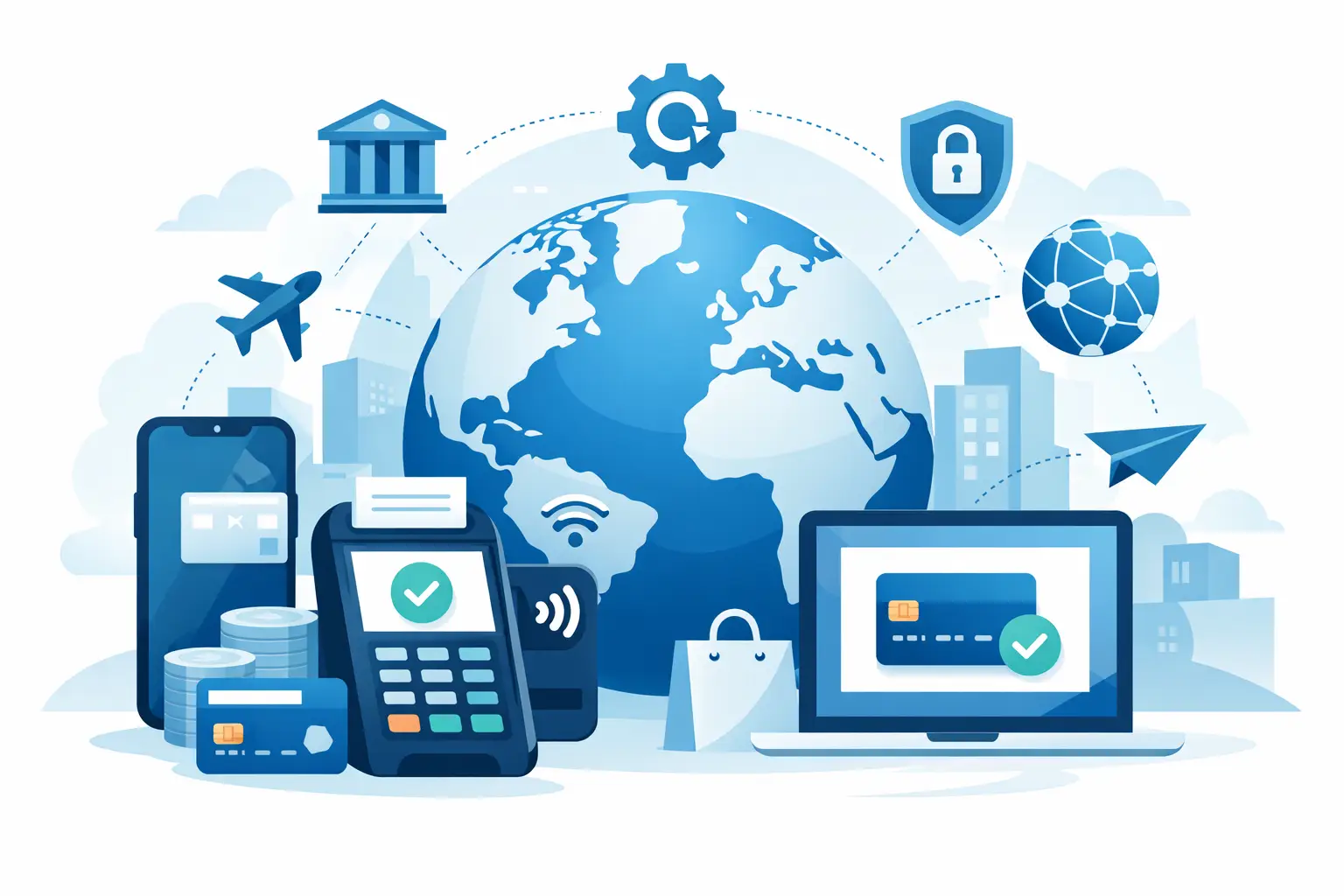
A payment API becomes a growth constraint the moment a business enters a new market, adds a second acquirer, or needs to investigate why approvals dropped overnight. The best payment gateway APIs do more than accept card data. They give payment teams control over routing, local method coverage, fraud decisions, settlement visibility, and the merchant experience behind every transaction.
For an online casino, crypto exchange, forex broker, or multi-market e-commerce platform, the question is not simply which gateway has a clean checkout. The question is whether the API can operate under pressure: changing issuer behavior, regional payment preferences, chargeback exposure, provider outages, and high transaction volumes.
What separates the best payment gateway APIs
A basic gateway API typically creates payments, authorizes cards, processes refunds, and sends webhooks. That is enough for a single-market merchant with one processor. It is not enough for a payment business or an international operator managing multiple providers, currencies, risk profiles, and settlement cycles.
The best payment gateway APIs separate the integration layer from the acquiring decision. Your platform should send a normalized payment request once, then use rules to select the right provider, payment method, fraud flow, and fallback path. This architecture reduces the cost of adding new rails and prevents a single PSP from becoming a commercial or operational bottleneck.
Four capabilities matter most:
- Multi-provider orchestration: The API should connect to multiple acquirers, PSPs, wallets, bank-transfer networks, and crypto providers without forcing your development team to build and maintain a separate checkout flow for each one.
- Payment-method depth: Global card schemes are essential, but local bank transfers, mobile wallets, vouchers, open-banking rails, and regional alternative payment methods often determine conversion in a specific market.
- Risk and approval optimization: Routing should consider issuer response patterns, BIN data, geography, amount, velocity, merchant category, and fraud signals. The goal is higher approval rates without simply lowering controls.
- Operational coverage: Payment creation is only one event. Teams also need refunds, chargebacks, recurring billing, reconciliation, settlements, merchant onboarding, reporting, and real-time status handling.
An API with excellent developer documentation but no routing, settlement, or risk tooling can still create a major operational burden. Conversely, a broad enterprise platform can be excessive for a startup that only needs card acceptance in one country. Fit matters more than brand recognition.
The main API models to evaluate
Direct processor APIs
Direct processor APIs connect a merchant to one provider's acquiring and payment stack. They can be quick to integrate and are often a logical starting point for standard e-commerce. They also provide a relatively consistent feature set for tokenization, recurring payments, refunds, and dispute management.
The trade-off is concentration risk. If approval performance falls in a market, the provider changes its underwriting position, or a local method is unavailable, your options may be limited. Adding another processor generally means building another integration and reconciling another data model.
This model works best when payment geography is narrow, transaction risk is predictable, and speed matters more than control over the payment supply chain.
Enterprise acquiring APIs
Enterprise gateways and acquirers are built for larger merchants with significant volume, more complex reporting needs, and international card acceptance. Their APIs can support advanced tokenization, network tokens, account updater services, detailed fraud workflows, and more sophisticated authorization handling.
They are strong candidates for established businesses with the volume and operational maturity to benefit from direct acquiring relationships. However, onboarding can take longer, commercial terms may be more demanding, and the platform may still leave local payment expansion or multi-provider routing to separate vendors.
Payment orchestration APIs
Payment orchestration platforms sit above processors and acquirers. They normalize integrations, centralize token handling, and route transactions based on configurable business rules. For companies using multiple PSPs, this can materially reduce integration debt and accelerate market expansion.
The quality difference between orchestration APIs is significant. Some provide a thin routing layer. Others include intelligent failover, cascading, payment analytics, reconciliation, fraud controls, merchant management, and branded payment interfaces. A thin layer may solve an immediate integration problem while leaving operations fragmented.
For high-volume and high-risk businesses, the stronger model is an orchestration environment that treats routing, risk, and settlement as connected decisions rather than isolated modules.
White-label payment infrastructure APIs
White-label infrastructure is designed for PSPs, merchant aggregators, operators, and founders launching their own payment product. Instead of sending merchants to a third-party gateway brand, the business operates under its own domain, visual identity, terms, and commercial model.
This model requires more than a checkout API. It needs merchant onboarding, account hierarchies, fee configuration, payment-provider connections, risk controls, settlement workflows, support tools, and role-based operational access. The benefit is ownership: you control the merchant relationship and can build payment operations as a commercial capability rather than a dependency.
How leading gateway APIs fit different use cases
Stripe is often a strong option for product-led businesses that value fast implementation, broad developer tooling, and a mature ecosystem. It is especially practical for conventional e-commerce, SaaS billing, and marketplaces operating within supported regions. Its limitation for some high-risk or highly localized payment strategies is that a single-provider model may not offer enough acquiring flexibility.
Adyen is a credible choice for large global merchants that want acquiring, cards, data, and omnichannel capabilities under one enterprise relationship. Its strength is scale and integrated payment operations. It may be a heavier commercial and implementation commitment than an early-stage payment business needs.
Checkout.com is commonly evaluated by digital enterprises seeking international card processing, performance optimization, and direct enterprise support. It can be well suited to companies with meaningful volume and a clear card-led acceptance strategy. As with other direct processors, buyers should assess how easily they can add independent providers and local rails when conditions change.
Braintree can fit businesses that need a familiar developer experience and access to major wallet and card flows. It is often most relevant where its geographic coverage and commercial model match the merchant's operating footprint. It is less likely to be the final architecture for a PSP that needs broad multi-acquirer control.
Nuvei is worth evaluating for businesses with complex international payment-method requirements, especially where local alternatives are central to conversion. Buyers should validate the exact countries, vertical eligibility, settlement options, and operational workflows needed for their model.
For payment firms, iGaming operators, crypto platforms, and merchant aggregators, a white-label orchestration platform such as ZepoPay addresses a different requirement: launching and operating a branded payment environment while connecting 75+ providers and 250+ payment methods through a unified API. The value is not another processor connection. It is the ability to control provider routing, merchant operations, risk workflows, and global expansion from one operating layer.
Questions technical and payments teams should ask
Start with the payment flow, not the feature checklist. Can the API support authorization, capture, void, refund, payout, recurring payments, and chargeback events with consistent status definitions? Are webhooks signed, retryable, idempotent, and detailed enough to support reliable internal ledgering?
Then test routing depth. Can rules route by country, currency, card BIN, issuer response, amount, payment method, merchant, or risk score? Can the platform cascade to a second provider after a soft decline without creating duplicate charges? Can teams adjust rules without a production release?
Risk controls need equally close review. High-risk verticals should ask whether the provider supports velocity rules, device and behavioral signals, configurable 3DS flows, negative lists, transaction monitoring, and chargeback prevention workflows. Approval optimization that ignores fraud losses is not performance optimization.
Finally, inspect the operational surface area. A payment API should not force finance teams into spreadsheets every month. Confirm how settlements are matched, how provider fees are calculated, how reserve balances are tracked, and how exceptions are investigated. If the platform supports sub-merchants, verify account hierarchies, permissions, reporting isolation, and configurable pricing.
Choose for control, not just integration speed
The fastest API integration is not always the fastest route to scalable payments. A single gateway can get a checkout live quickly, but it can become expensive when expansion requires new local methods, stronger fraud controls, or a second acquiring relationship.
Choose a direct processor when simplicity is the priority. Choose enterprise acquiring when volume and direct network performance justify the commitment. Choose orchestration or white-label infrastructure when payment acceptance itself is strategic - when approvals, risk, provider leverage, merchant operations, and brand ownership directly affect revenue.
The right gateway API should give your team room to make better payment decisions as markets, providers, and risk conditions change. That flexibility is what turns payments from a dependency into operating infrastructure.